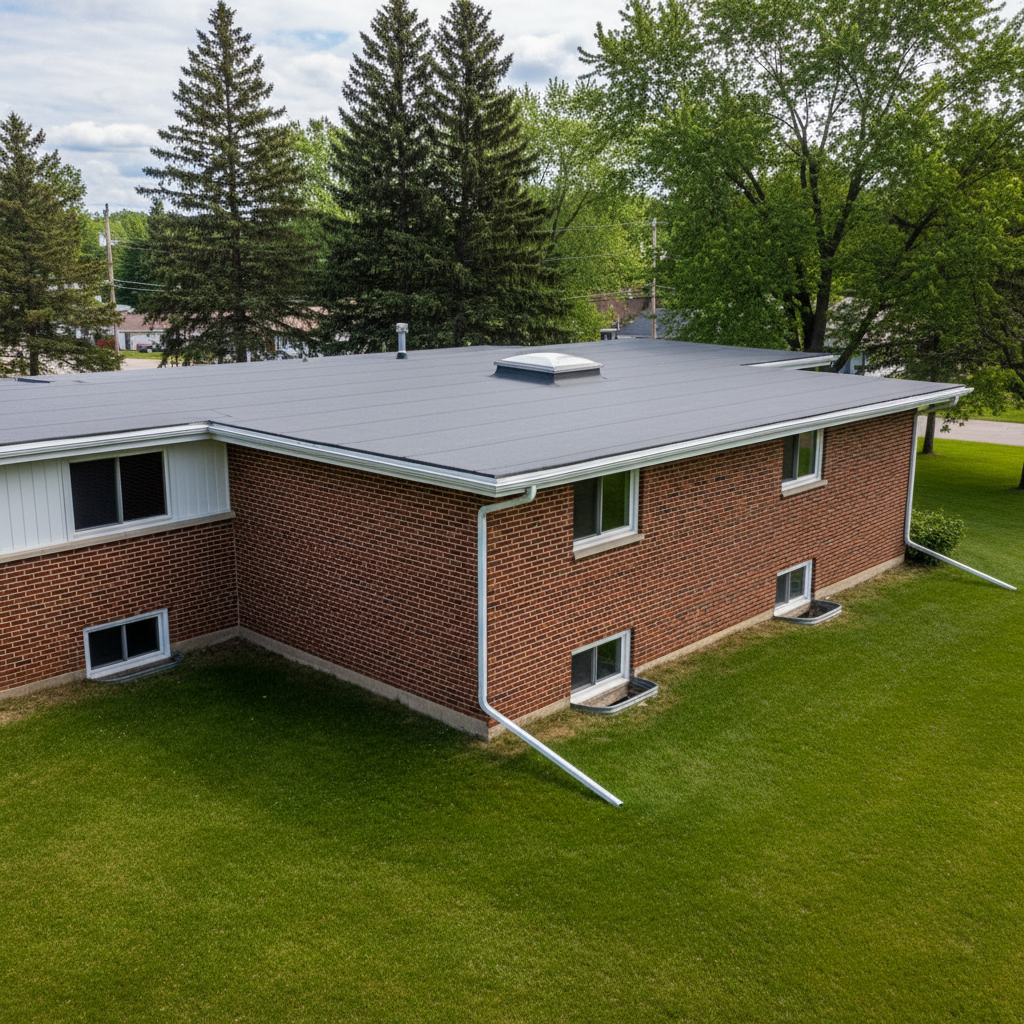
Alright, let's talk flat roofs. They're pretty common here in Superior, especially on commercial buildings, garages, and even some of those older, charming homes around the East End that have additions. But man, I see homeowners make some real head-scratching mistakes when they're planning or hiring for these projects. You really don't want to learn these lessons the hard way, trust me.
Ignoring the "Flat" in Flat Roof
First big one: people treat a flat roof like it's just a regular shingle roof, only laid out flat. It's not. A truly flat roof is actually a bad roof. You need a slight slope for drainage, even if it's just 1/4 inch per foot. Without that, water just sits there. And when water sits, especially with our freeze-thaw cycles up here, you're practically asking for trouble. Ponding water is the absolute enemy of any flat roofing system, whether it's EPDM, TPO, or modified bitumen. If a contractor tells you they're just going to slap down some material on a perfectly level surface, that's a huge red flag. They either don't know what they're doing, or they just don't care about your long-term investment. Always ask about their drainage plan.
Underestimating Material Choices
Another common blunder is not understanding the different flat roofing materials out there and why one might be a better fit for your specific situation. It's not just about picking the cheapest bid, you know? EPDM (rubber roofing) is durable and cost-effective, but it's black, which can absorb a lot of heat. TPO is a lighter, reflective material that can actually help with energy efficiency, but it needs careful welding at the seams. Modified bitumen is a torch-down or self-adhered system that's tough, though it can be more labor-intensive. I've seen people go with the cheapest option only to find out it's just not the right fit for their building's use or how much it's exposed to the elements. For instance, if you've got a lot of foot traffic on that flat roof, some materials will hold up way better than others. Do your homework, or at least ask your contractor to explain the pros and cons of each for your roof.
Skipping the Substrate Inspection
This is a big one that can really bite you later. A flat roof isn't just the top layer; it's a whole system. What's underneath that membrane matters a whole lot. We're talking about the insulation, the vapor barrier, and the deck itself. I've been on jobs where a homeowner just wanted a new membrane, but when we pulled up the old one, the decking was completely rotted out from years of unnoticed leaks. Or the insulation was waterlogged and totally useless. Trying to save a buck by not addressing these underlying issues is like putting a fresh coat of paint on a rusty car. It looks good for a bit, but the problem's still there, festering away. A good contractor, like us at Paradise Roofing Inc, will insist on a thorough inspection of the substrate and include any necessary repairs or upgrades in their proposal. Don't let someone just cover up problems.
Ignoring Proper Flashing and Edges
Flat roofs have a lot of edges and penetrations – vents, pipes, parapet walls. These are often the weak points where leaks start. I've seen shoddy work where flashing isn't properly sealed, or it's not tied into the wall correctly. Water always finds the path of least resistance, and if your edges aren't sealed and flashed right, it's going to get in. Our winters here in Superior, with all that snow piling up and then melting, really put these details to the test. Ice dams can form, pushing water into tiny gaps. Make sure your contractor has a solid plan for all transitions and penetrations. This isn't where you want to cut corners, believe me.
Not Getting a Detailed Scope of Work
Finally, and this applies to any roofing project, but especially flat roofs: get everything in writing. Not just a price, but a detailed scope of work. What materials will be used? What's the warranty on the material and the labor? How will they handle debris? What's the plan for drainage? What's the estimated timeline? I've seen too many misunderstandings because things were left vague. You need to know exactly what you're paying for and what to expect. Don't be afraid to ask questions. It's your home, and your investment. Make sure you're confident in the plan before any work starts.
Avoiding these mistakes will save you a lot of headaches and money down the road. A flat roof done right will protect your property for decades, but a flat roof done wrong will be a constant source of frustration. Be smart about it, okay?